Sewer Scope & Camera Inspection in Oregon — See the Pipe Before You Pay to Dig It
A sewer scope is the cheapest insurance in real estate and the only defensible basis for an excavation quote. Roughly $250 to find out whether you are looking at a $600 cleaning or a $14,000 replacement.
- 45 to 90 minutes
- Statewide Oregon
- 7 days a week
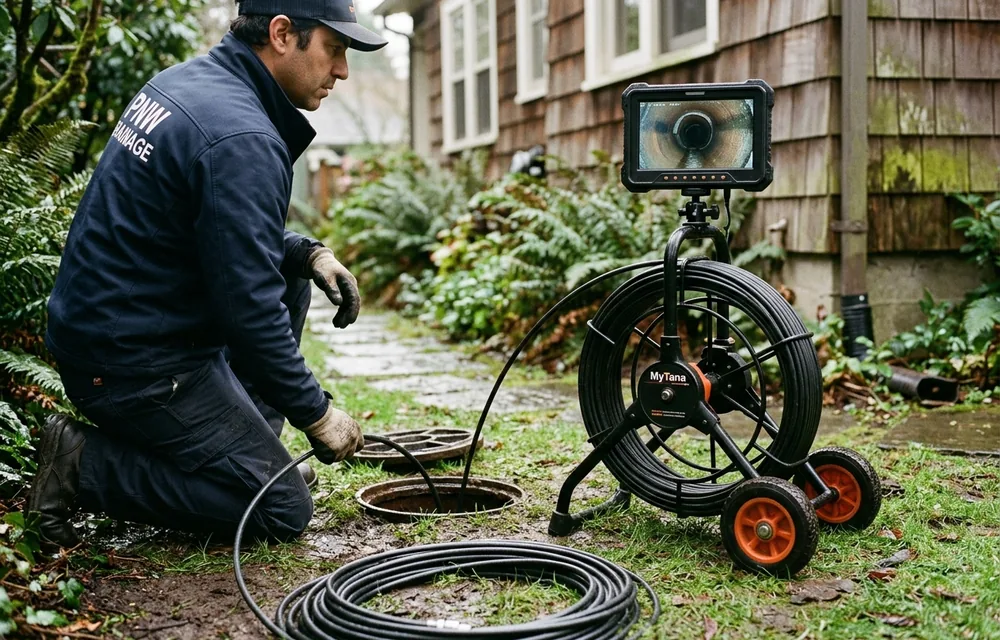
Signs you may need sewer scope & camera inspection
Most people arrive here describing a symptom rather than naming a service. These are the three that point this way.
You are buying a house built before 1980
Clay, cast iron and Orangeburg were all standard in that era, and a home inspection does not include the sewer. This is the cheapest contingency-period leverage available.
The cable stops at the same footage every time
A blockage that recurs at one location is a defect at that location — an offset joint, a crack, a belly or a root entry. Clearing it repeatedly treats a symptom.
There is a sewage smell, a soggy strip of lawn or unusually green grass in a line
Effluent is leaving the pipe and entering the soil. That is a structural failure, and no amount of cleaning addresses it.
What a real inspection includes
The word "inspection" gets used loosely. Here is what you should insist on from anyone:
- A recorded video file you keep. Not a technician describing what they saw. An actual file, sent to you, that you can forward to a second contractor for a competing bid or to a seller during a negotiation.
- Footage marks. The distance from the access point to each defect, so a repair can be priced without guesswork.
- Surface locating with depth. A sonde in the camera head plus a locator wand lets the operator paint the line on your lawn or driveway and tell you how deep it runs. Depth is a major driver of excavation cost.
- A written report in plain language. What the pipe is made of, its approximate age, what is wrong, how urgent it is, and what the options cost.
An inspection without a locate is half a service. An inspection without a video file is a story.
There is a published benchmark for what usable sewer footage looks like. Portland Permitting & Development, which accepts video in place of an on-site inspector for some residential sewer repairs, requires that the recording state the size of the camera head and whether skids are used, and that it show "water running while the camera is moving downstream (on the way out), and the water turned off while the camera is being pulled back". That technique is what reveals a belly: standing water sitting in a low spot once the flow stops. Ask for footage to that standard whether or not a permit is involved.
Buying a house in Oregon? Scope it.
A standard home inspection does not include the sewer lateral. Inspectors say so explicitly in their contracts, and buyers routinely miss it. The lateral is also the single most expensive component that a general inspection will not look at.
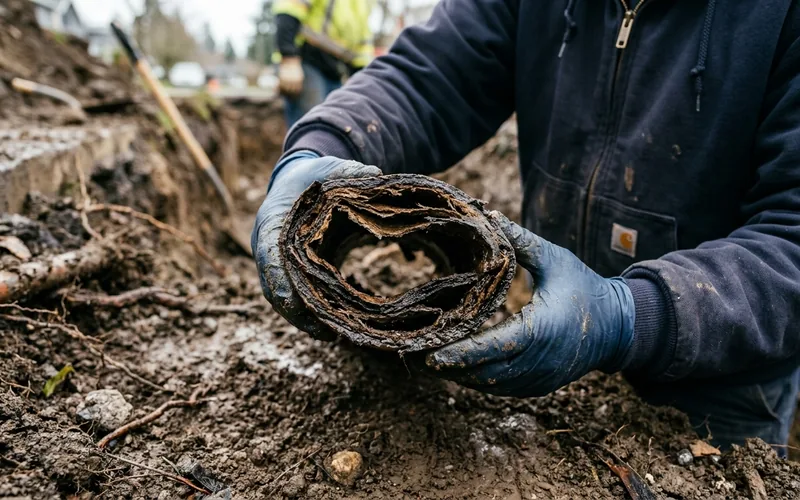
This matters disproportionately in Oregon because of when the housing stock was built. Homes built between roughly 1945 and 1972 may have Orangeburg — tar-impregnated wood-fibre pipe that absorbs water, swells and deforms. It was common through Portland-area postwar development and appears throughout the valley. Homes from earlier eras typically have clay tile, whose joints are the entry point for roots. Mid-century homes often have cast iron inside the building, which corrodes from the invert outward.
The lateral is almost always the homeowner’s responsibility for at least the private-property portion, and in many Oregon jurisdictions responsibility extends into the right-of-way to the connection at the main. Portland publishes its split in City Code Chapter 17.32; Bend assigns the property owner the service from the main into the property; Oregon City runs a lateral repair assistance program. The rules differ by city, but the pattern does not: if it breaks on your side, it is your bill.
A $250 scope during your inspection contingency is leverage. Findings become a price reduction, a seller-funded repair, or a walk-away. After closing, the same findings are simply your problem.
What cameras find, and what each finding means
| What the camera shows | What it means | Typical next step |
|---|---|---|
| Root hair at a joint | Joint is open and leaking; roots will return | Cut and jet now, plan lining |
| Standing water mid-run ("belly") | Section has settled below grade; solids collect there | Spot repair — lining will not fix grade |
| Offset joint | Segments shifted; catches paper and solids | Spot repair or lining if minor |
| Longitudinal cracking | Structural fatigue; will progress | Lining if host pipe is intact |
| Deformed, blistered dark wall | Likely Orangeburg failing | Replacement — usually not linable |
| Scale narrowing the bore | Hard-water or cast-iron corrosion buildup | Jetting, then re-scope |
| Camera cannot pass at all | Collapse or full blockage | Locate the point, then excavate or line |
Ask to see the footage on site with a walkthrough, not just a verdict. If you want a second opinion on what you are looking at, you have the file to get one — that is the point of giving it to you.
Before you pay anyone to dig
Never accept an excavation quote from a contractor who has not scoped and located the line, and be cautious of a free inspection tied to a same-day repair quote. The incentive is obvious.
A defensible replacement quote should specify: where the failure is by footage, how deep the line runs at that point, what the pipe material is, whether trenchless lining or pipe bursting is viable, what surface has to be cut and restored, and which permits apply. If a quote does not contain those, it is a number, not an estimate.
Ask whether the inspection fee is credited toward a repair if you go ahead, and make sure the video is yours regardless of who you hire.
When to scope even without symptoms
Before closing on any home
Especially anything built before 1980, or any lot with mature trees between the house and the street.
After the second clog in one line
Two failures in the same run within two years is a structural signal, not bad luck.
Before a remodel or an addition
Finding a failing lateral after the new slab is poured is an expensive way to learn.
Before landscaping or a driveway pour
Locate the line first. Concrete over a failing lateral multiplies the future repair cost.
After any large tree removal nearby
Dying root masses decay and can leave voids, and the stump grinding itself sometimes finds the pipe.
Before buying a rental or multiplex
Shared laterals in older Oregon multiplexes are common and the liability is proportionally larger.
Frequently asked questions
How much does a sewer camera inspection cost in Oregon?
Typically $195 to $425. Straightforward access through an existing exterior cleanout is at the low end. Pulling a toilet for access, long runs, or an inspection requiring extensive surface locating sits higher. Many contractors credit the fee toward a repair if you go ahead with them.
Is a sewer scope included in a home inspection?
No. Standard home inspections explicitly exclude the sewer lateral, and it is usually the most expensive single component they do not examine. It is ordered separately, and in Oregon it is worth ordering on any home built before about 1980 or any lot with mature street trees.
Should I get a copy of the video?
Yes, always, and you should keep it whether or not that contractor does the repair. Ask for footage marks for each defect, a surface locate with depth, and a written plain-language report. If a contractor will not give you the file, ask why.
How long does a sewer inspection take?
Usually 45 to 90 minutes including the locate and the walkthrough of findings. Difficult access or a line that requires clearing before the camera can pass will take longer, and you should be told before time is added.
Can a completely blocked line be inspected?
Not past the blockage. The camera can go up to it, locate that exact point, and tell you the depth — which is genuinely useful, because it tells an excavator where to dig. Usually the line is cleared first, then the full run is inspected properly.
What is Orangeburg pipe and why does it matter in Oregon?
Orangeburg is bituminised wood-fibre pipe used roughly from 1945 to 1972 as a cheap alternative to clay. It absorbs groundwater, swells and deforms out of round, and its service life was only 30 to 50 years — so every remaining run is now past it. It shows up frequently in postwar Oregon neighbourhoods. It generally cannot be lined, so finding it means planning a replacement rather than a repair.
Guides that cover this in more depth
How to Unclog a Drain Yourself (and When to Stop)
Most single-fixture clogs are genuinely a DIY job. Here is what works, in the order a plumber would try it — and the p…
Sewer Backup: What to Do in the First Ten Minutes
A main line backup gets measurably worse with every gallon of water the household uses. What you do in the first ten m…
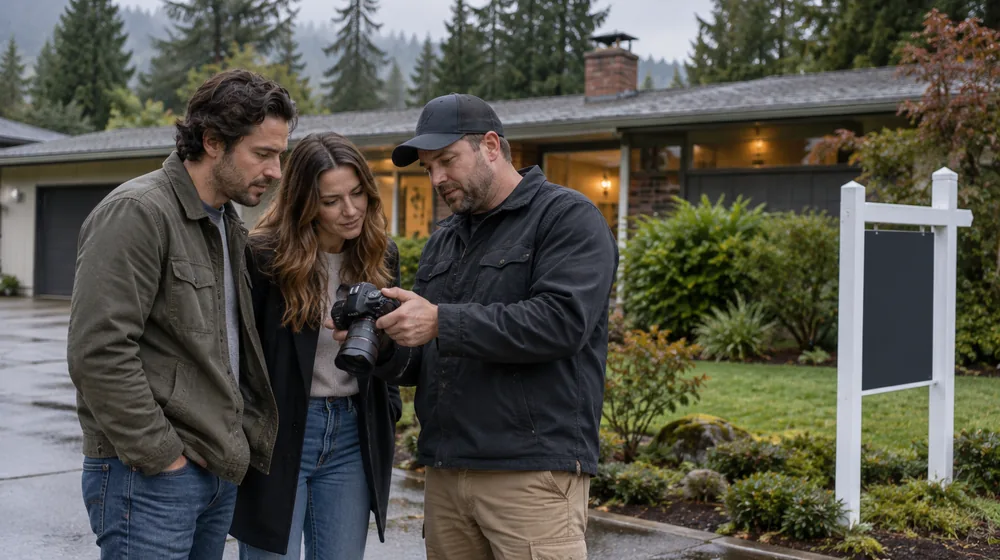
Why You Need a Sewer Scope Before Buying an Oregon Home
Roughly $250 during your inspection contingency, to find out whether you are buying a $600 cleaning or a $14,000 repla…

Grease and Kitchen Drains: Why Snaking Keeps Failing
A cable bores a hole through the middle of a grease coating and leaves the coating exactly where it was. That is why t…
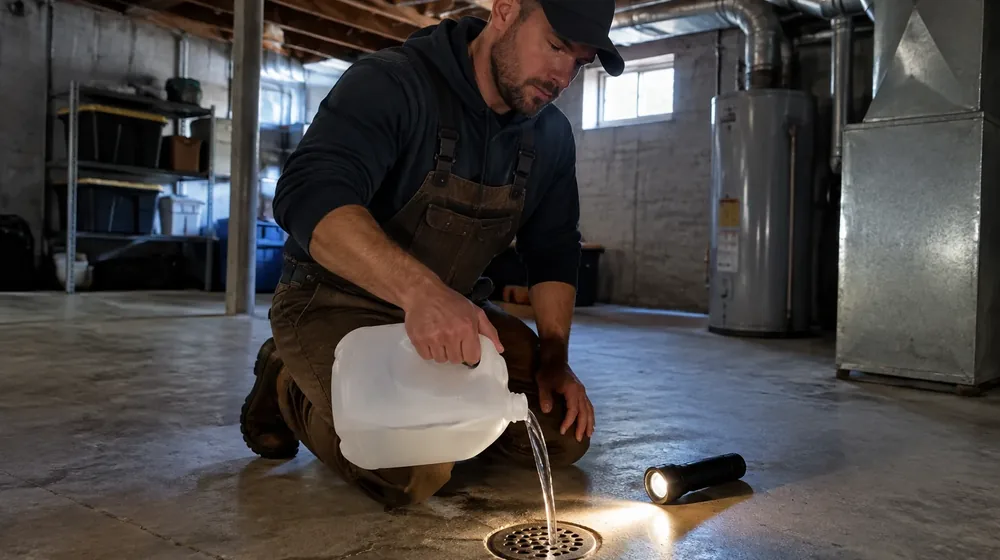
Why Your House Smells Like Sewer (and How to Fix It)
A sewer smell in your home is never mysterious. Your drain system is a sealed loop that vents above the roof, so if yo…
Where sewer scope & camera inspection comes up across Oregon
The local conditions behind this work are not spread evenly. These are the cities where our local pages describe them most directly.
- Medford: Expansive clay and seasonal soil movement
- Portland: Orangeburg laterals reaching total failure
- Albany: Historic-district laterals of genuine antiquity
- Eugene: Canopy density over old clay laterals
- Salem: Postwar Orangeburg through the mid-century tracts
- Beaverton: Heavy clay soil and crawlspace water