Drain cleaning and sewer service in Keizer, Oregon
Keizer is a comparatively young city — it incorporated in 1982 — and its housing reflects that, with the bulk built between 1960 and 1995. Its defining plumbing characteristic is its position directly on the Willamette floodplain north of Salem.
- Marion County
- Willamette Valley
- Answered 24/7
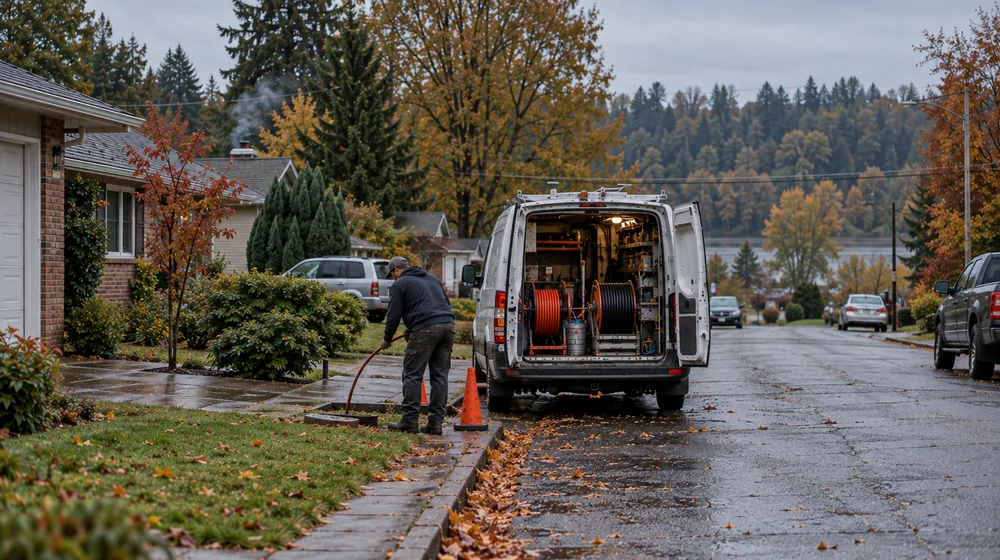
What goes wrong with Keizer plumbing
Floodplain water table
Keizer sits low and close to the Willamette. Winter groundwater reaches lateral depth across much of the city, driving infiltration and making functioning sump systems genuinely important rather than optional.
Sandy river-deposit soils and settlement
Alluvial river deposits settle unevenly under laterals, producing bellies. Because lining preserves existing slope, a belly requires excavation and re-grading — worth knowing before accepting a trenchless quote.
1970s ABS and cast iron transitions
Homes from Keizer's main growth period frequently have ABS-to-cast-iron transitions that were adequate when installed and are now the most common leak point.
Housing stock and pipe materials
Housing: Predominantly 1960–1995, with limited older stock and continued newer development.
Likely pipe materials: Cast iron and ABS on the 1960s–1970s share, PVC from the 1980s onward.
Neighbourhoods in and around Keizer
Gubser, Clearlake, McNary, Keizer Station area, River Road corridor.
Cities near Keizer
Most relevant in Keizer
Picked from the local conditions above, so the list differs city to city.
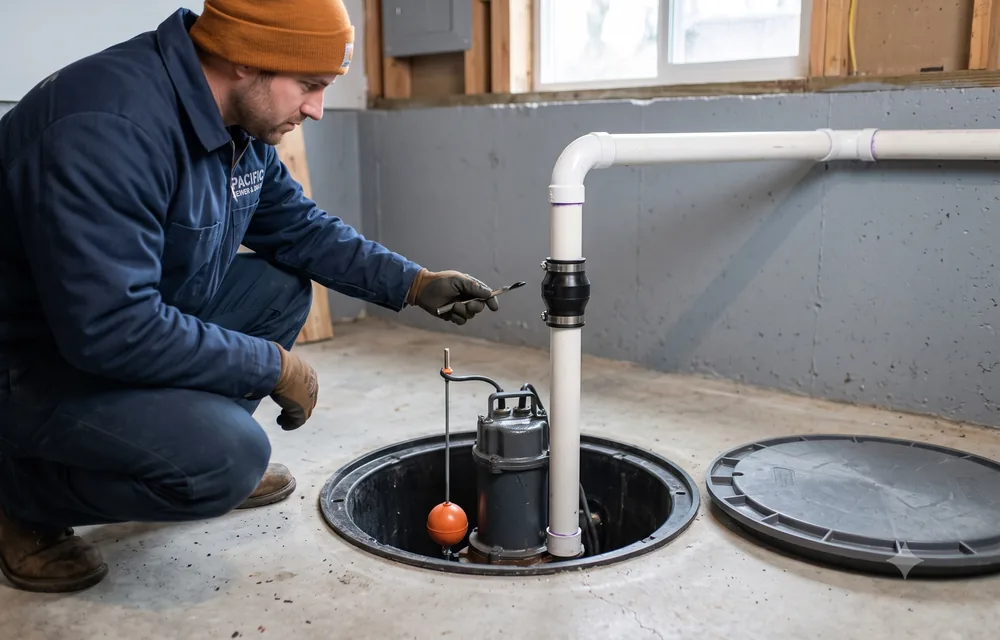
Sump Pump Installation & Repair

Drain Cleaning
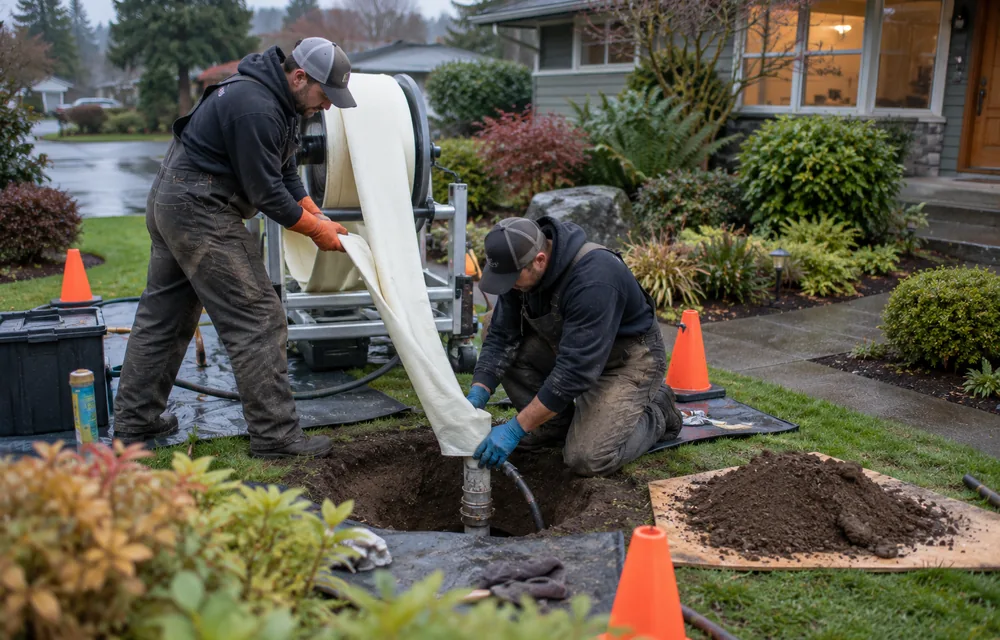
Sewer Line Repair & Replacement
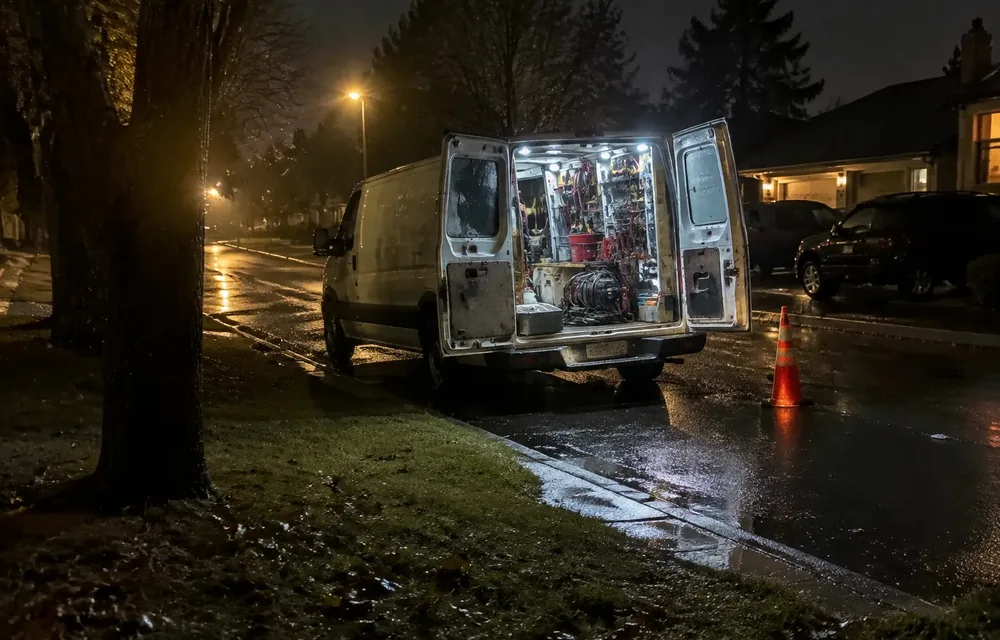
24/7 Emergency Drain & Sewer Service
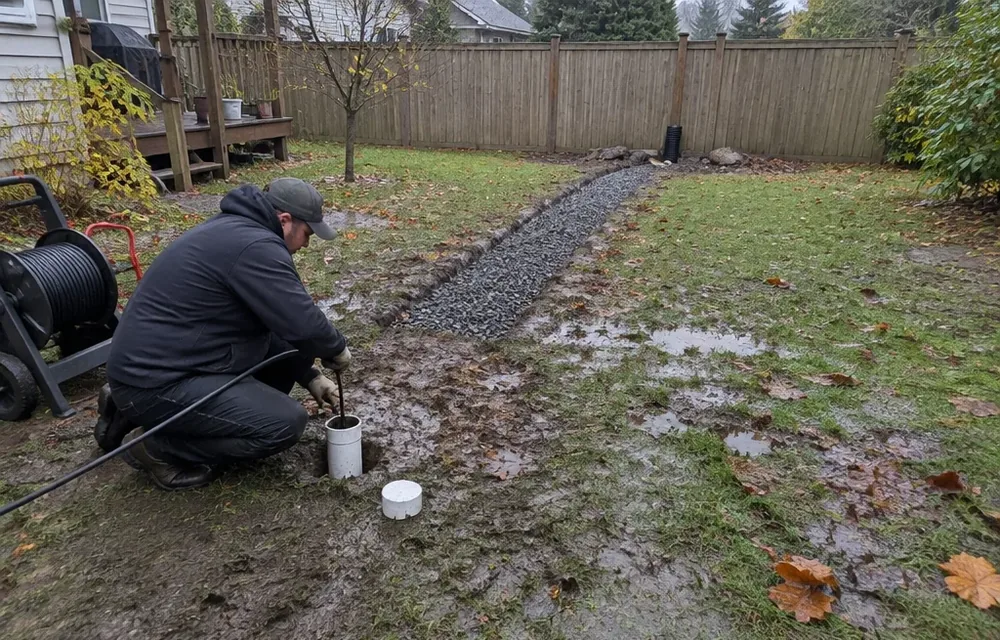
French Drain Cleaning & Repair
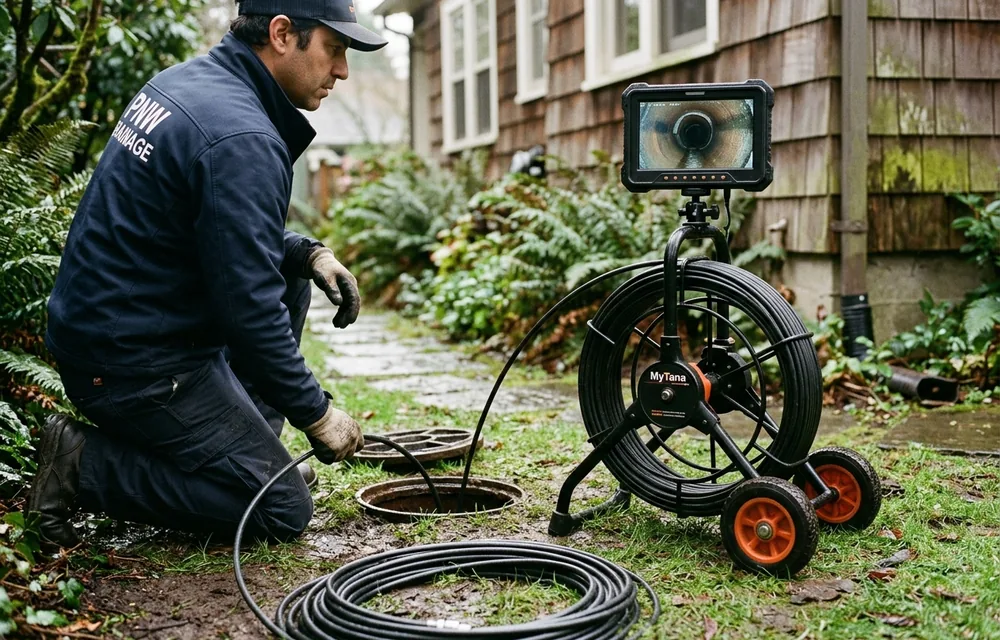
Sewer Scope & Camera Inspection
Keizer plumbing questions
Why does Keizer flood-plain groundwater matter for my sewer?
Keizer sits low and close to the Willamette, and the winter water table reaches lateral depth across much of the city. Groundwater then enters through any compromised joint, so your line spends the wet season carrying water it was never designed to carry. It is also why a functioning sump system here is genuinely important rather than a nice-to-have.
What is causing the low spot in my Keizer sewer line?
Alluvial river deposits settling unevenly beneath it. Keizer's sandy river-deposit soils compact at different rates along a run, which drops sections below their intended grade and creates a belly where solids collect. This matters commercially: lining preserves existing slope, so a belly cannot be lined away. It has to be excavated and re-graded.
My Keizer home is from 1978. What is the likely weak point?
The transition fittings. Homes from Keizer's main growth period frequently have ABS-to-cast-iron transitions that were entirely adequate when installed and have become the most common leak point since. They fail as a slow joint leak rather than a clog, so there is often no drainage symptom until someone inspects the crawlspace.