24/7 Emergency Drain & Sewer Service in Oregon
If sewage is entering your home right now, stop reading and call. Everything below matters after the water stops rising.
- Calls answered 24/7
- Statewide Oregon
- 7 days a week
- 24/7 dispatch
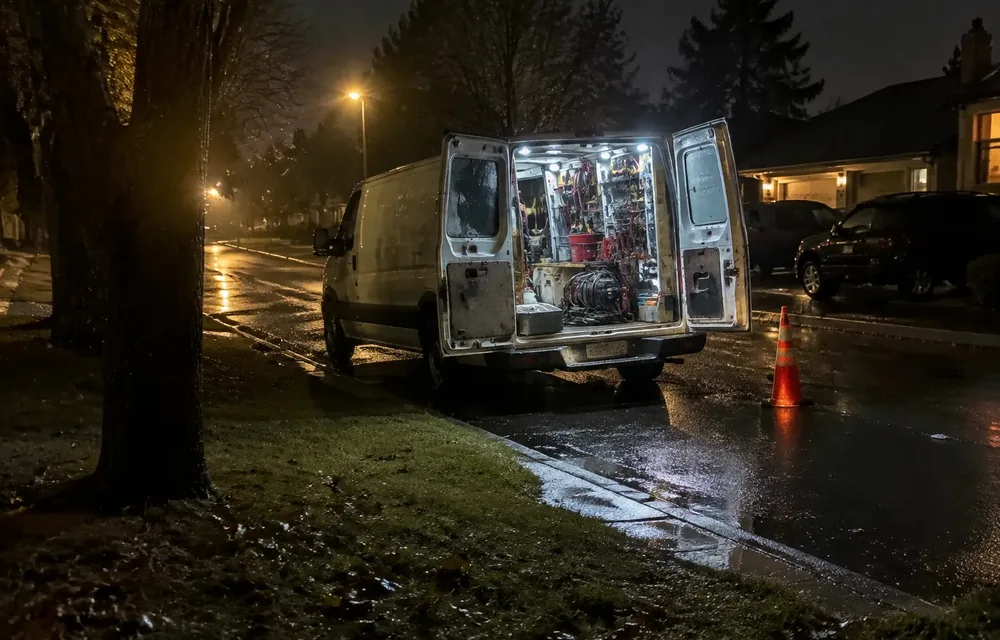
Signs you may need 24/7 emergency drain & sewer service
Most people arrive here describing a symptom rather than naming a service. These are the three that point this way.
Sewage is entering the house now
Stop all water use immediately, including dishwasher and washing machine, and keep people and pets out of the water. This is the one that cannot wait until morning.
Two or more fixtures have failed together
The main is blocked enough that waste has nowhere to go. Continuing to run water pushes it into whichever fixture sits lowest.
The only toilet in the property will not flush
A single-bathroom household or a rental with one working toilet is an urgent call regardless of what the blockage turns out to be.
Do this in the next five minutes
Stop all water use
Every fixture, and the appliances people forget: dishwasher, washing machine, ice maker. With the line blocked, water you add has to surface somewhere, and it picks the lowest drain in the building.
Do not flush again
The most common way a manageable backup becomes a flooded floor is one more hopeful flush.
Keep people and pets out of the water
Sewage carries bacteria and, in older Oregon homes, sometimes contacts asbestos-containing materials. Treat it as contaminated, not just dirty.
Cut power to affected areas if water is near outlets
Only if you can reach the breaker panel without standing in the water. If you cannot, leave it and say so on the phone.
Find your cleanout if you can
A capped pipe, usually 3 or 4 inches, near the foundation or in the front yard toward the street. Knowing where it is saves fifteen minutes on arrival. Do not open it — that can release pressurised sewage.
Photograph everything before cleanup
If you end up filing an insurance claim, the photos taken before you touched anything are the ones that matter.
What counts as an emergency, honestly
It is worth knowing the difference before paying an after-hours premium.
Call now: sewage entering the building. Multiple fixtures backing up together. Water rising in a tub or shower when a toilet is flushed. A sewage smell with visible wet ground in the yard. Any backup in a building with vulnerable occupants — a care facility, a daycare, a food-service kitchen mid-service.
This can wait for a normal appointment, and cost you less: one slow fixture with everything else draining normally. A gurgling sound with no backup. A smell with no water. A clog you have already cleared where you want the cause investigated.
If what you have is in the second list, ask whether it can wait for a visit at standard rates. That conversation costs you nothing.
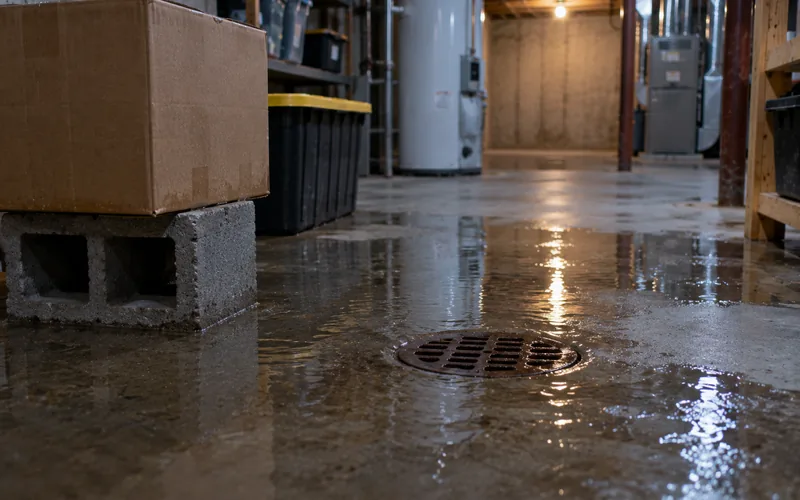
What after-hours actually costs
The most common complaint about emergency plumbing is not the price. It is finding out the price on the invoice.
What to expect: you should be told on the phone, before a truck leaves, what the visit involves and whether it can safely wait for a cheaper daytime slot. If the situation on arrival is materially different from what was described, the work should stop and be talked through with you before it resumes. No surprises, no pressure to sign in a flooded hallway.
Emergency calls typically run $249 to $750 for clearing an active main-line backup. Nights, weekends and holidays carry a premium over standard drain cleaning rates; ask for it up front. If what you actually need is a five-figure sewer replacement, the emergency call gets you flowing again, and the permanent repair can be looked at in daylight when you can think, not at 2am.
Storm season, and why Oregon backups cluster
Emergencies are not evenly spread across the year. It spikes with sustained rain, particularly November through February in the valley and on the coast.
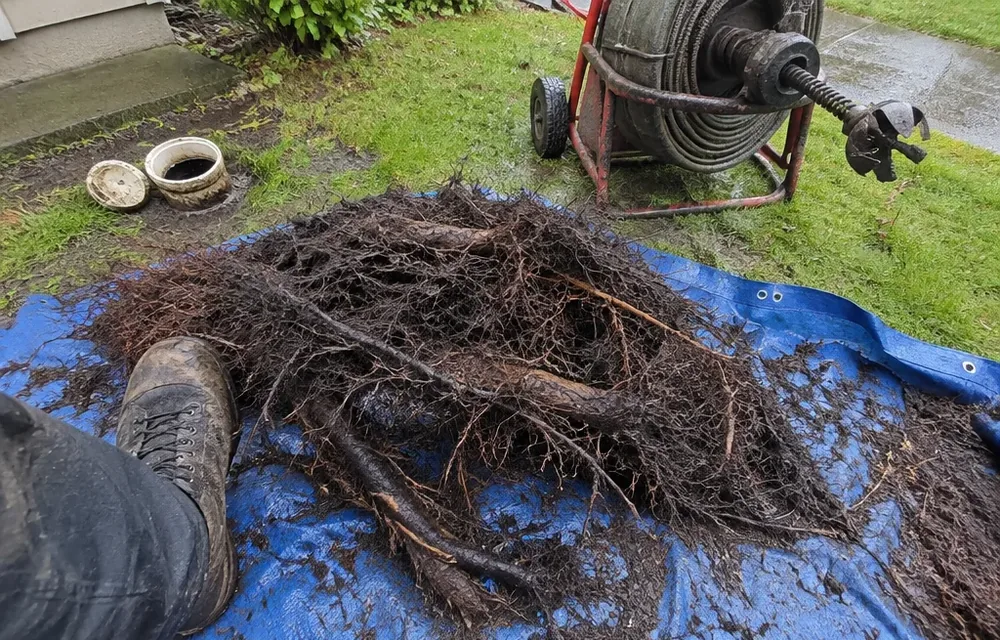
The mechanism is groundwater infiltration. A lateral with root-opened joints or cracked segments sits in saturated soil, and groundwater enters through exactly the defects that were previously only a slow-drainage nuisance. A line that coped all summer at forty percent capacity has no headroom left when it is also carrying infiltration.
The practical implication: the marginal lateral that gave you one slow week in August is the one that backs up in a December atmospheric river, at 11pm, at emergency rates. If you had a clog last summer and never found out why, a camera inspection in early autumn is genuinely cheaper than the storm-season call.
Coastal properties add a second mechanism: high water tables during winter storms can approach or exceed lateral depth, which both drives infiltration and can defeat gravity flow entirely in low-lying areas.
Commercial emergencies
For restaurants, care facilities, property managers and multi-tenant buildings, downtime is the real cost and it dwarfs the invoice.
Commercial work can be done overnight so a kitchen opens on schedule. If you manage multiple Oregon properties, ask about a priority service agreement — having your building details, access notes and cleanout locations already on file removes a great deal of the delay from a 3am call.
Frequently asked questions
How fast can someone get here?
Calls are answered live 24/7, and arrival time depends on where you are and how busy it is. Metro areas are usually quickest; remote coastal and Eastern Oregon locations take longer, so ask for a realistic time on the phone.
How much does an emergency plumber cost in Oregon?
Emergency main-line clearing typically runs $249 to $750. Nights, weekends and holidays carry a dispatch premium over standard rates. The after-hours premium is explained on the phone before a truck leaves, and if conditions on site differ from what was described, work stops and is discussed with you before it resumes.
Should I use a plunger on a sewage backup?
No. A plunger is for a fixture clog. On a main-line backup it can force contaminated water up through other fixtures and does nothing to the actual blockage, which is well downstream. Stop using water and call.
Does insurance cover a sewer backup?
Standard homeowner policies usually exclude sewer backup unless you carry a specific water backup endorsement, which many Oregon carriers offer inexpensively. Photograph everything before any cleanup, keep all invoices, and contact your carrier before disposing of damaged property.
Can someone come out on a holiday or in the middle of the night?
Yes. Calls are answered 24/7, holidays included. Ask for the after-hours premium before anyone is sent, so it is never a surprise on the bill.
My whole street seems affected — is it still my problem?
Possibly not. If neighbours are backing up simultaneously the blockage may be in the public main, which is the utility’s responsibility to clear, not yours. Call your city’s wastewater emergency line first — if it is their main, they fix it at no cost to you. Describe what the neighbours are seeing when you call, so you are not sold a visit you do not need.
Is sewer backup cleaning included, or just clearing the line?
Both, within a plumber's scope: the blockage is cleared, the line is camera-checked, and standing wastewater is pumped out of the immediate area where it is safe to access. What a drain pro does not do is structural water-damage restoration: drying out walls and flooring, mold remediation, or replacing contaminated materials. That is a separate specialty, and if your backup has reached that point, a restoration company and your insurer handle it alongside the drain pro.
Guides that cover this in more depth
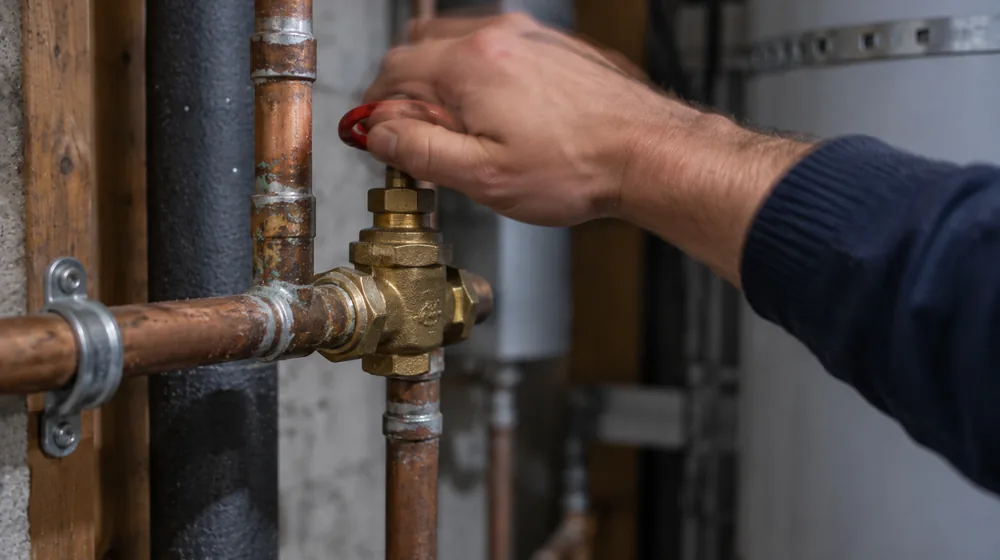
Sewer Backup: What to Do in the First Ten Minutes
A main line backup gets measurably worse with every gallon of water the household uses. What you do in the first ten m…
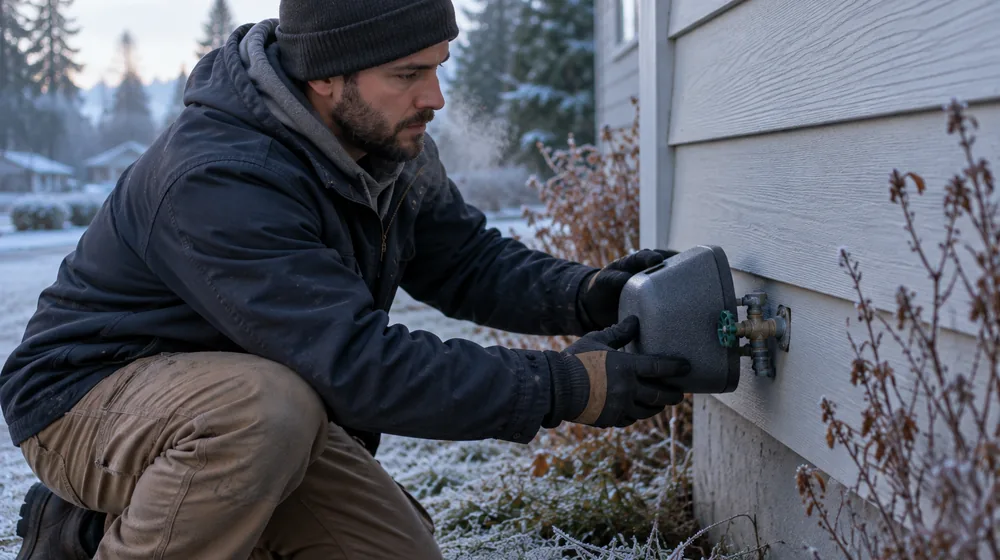
Winterize Oregon Plumbing: 2026–27 Winter Checklist
For winter 2026–27, NOAA forecasts a very strong El Niño, which usually tilts Oregon toward a warmer, drier winter, bu…
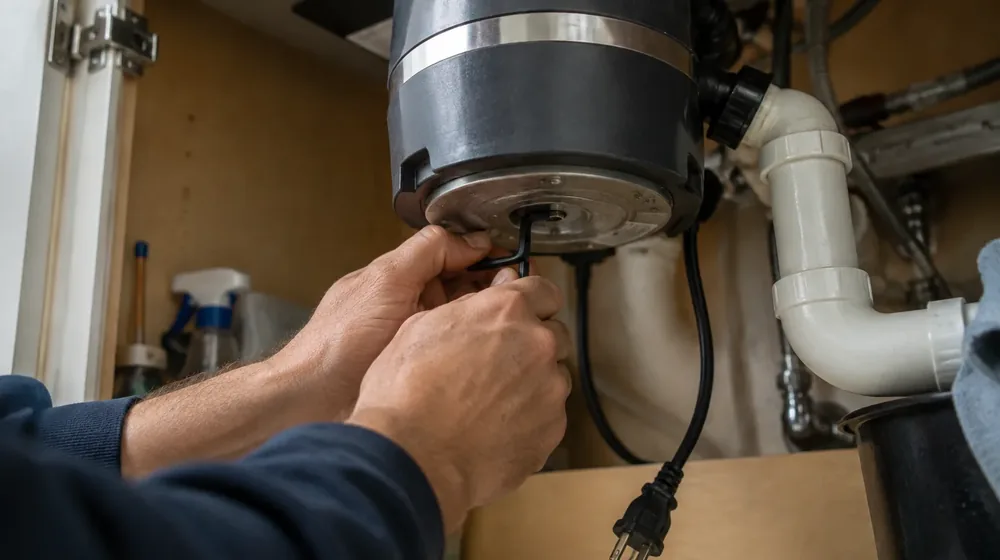
Garbage Disposal Humming, Jammed or Leaking: Fix Guide
A garbage disposal has four ways of going wrong and each one sounds different. The hum, the silence, the leak and the …
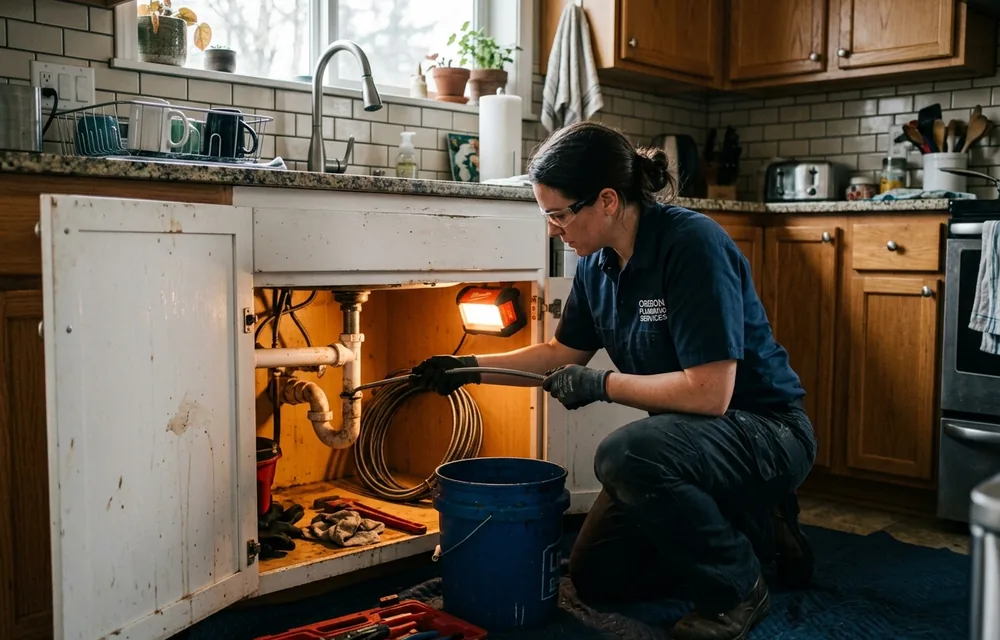
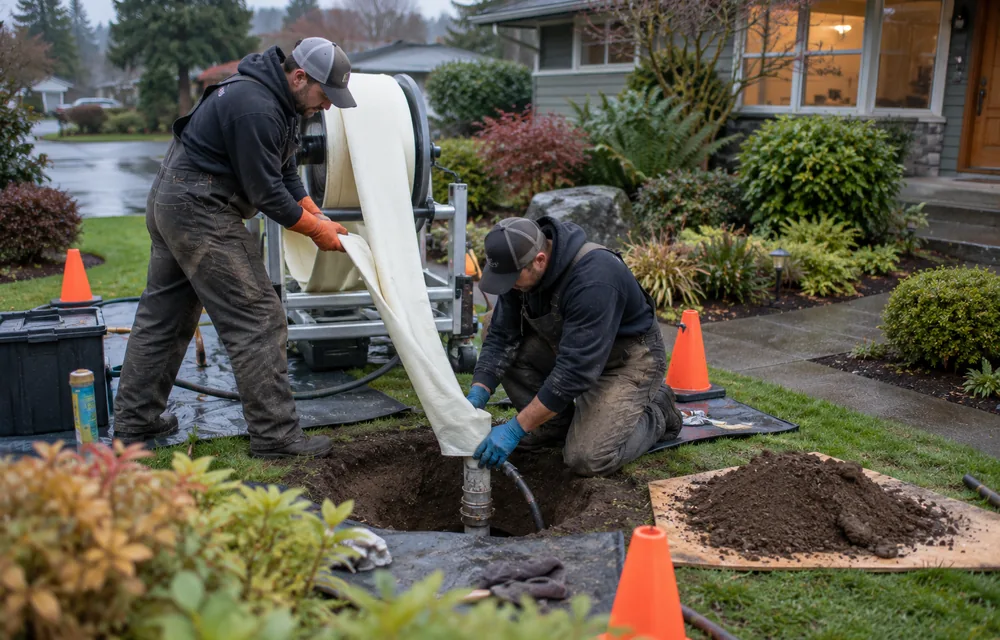
Where 24/7 emergency drain & sewer service comes up across Oregon
The local conditions behind this work are not spread evenly. These are the cities where our local pages describe them most directly.
- Salem: Willamette floodplain groundwater
- Springfield: Seasonal recurrence tied to McKenzie levels
- Portland: Combined-sewer legacy and basement backups
- Medford: Summer drought driving root intrusion
- Keizer: Floodplain water table
- Beaverton: Cast iron and early ABS on 1960s–1970s homes, PVC on anything later