Drain cleaning and sewer service in Beaverton, Oregon
Beaverton is mostly a postwar and later suburb, which changes the problem profile completely from Portland proper. Less clay tile, less Orangeburg, far more 1960s–1990s development on heavy Washington County clay soils that drain slowly and hold water against foundations all winter.
- Washington County
- Portland Metro
- Answered 24/7
What goes wrong with Beaverton plumbing
Heavy clay soil and crawlspace water
Washington County's clay sheds water poorly. Water arrives at the foundation and stays there, so crawlspace moisture and sump pump demand are noticeably higher here than in the sandier parts of the metro. Pumps run near-continuously through a valley winter.
Cast iron reaching end of life
Homes from the 1960s and early 1970s are hitting the age where cast iron drain stacks corrode from the invert outward. The symptom is repeated slow drains that cabling fixes only briefly, because the pipe interior has gone rough and scaly.
Mature landscaping over 1970s laterals
Fifty years of growth on 1970s subdivisions means substantial root systems over lines that were never intended to host them. Beaverton root calls are typically ornamental and hedge roots rather than the street-tree pattern seen in inner Portland.
Housing stock and pipe materials
Housing: Predominantly 1955 onward, with large tracts from the 1970s and 1980s and continued build-out through the 2000s.
Likely pipe materials: Cast iron and early ABS on 1960s–1970s homes, PVC on anything later. Orangeburg appears in the oldest pockets near central Beaverton.
Landmarks and neighbourhoods in Beaverton
The Tualatin Valley floor
Washington County's heavy clay sheds water poorly, so water arrives at the foundation and stays. Crawlspace moisture and sump pump demand run noticeably higher here than in the sandier parts of the metro, and pumps cycle near-continuously through a valley winter.
Cedar Hills and Cedar Mill
The older pockets on this side of Beaverton are where the 1960s and early 1970s cast iron sits. Repeated slow drains that cabling fixes only briefly are the signature, because the pipe interior has gone rough and scaly rather than being blocked.
Murrayhill and the hillside subdivisions
Sloped 1980s and 1990s development means surface water arrives fast and collects at the bottom of the grade. Yard drains and foundation drainage matter more here than the pipe material does.
A closer look at Beaverton
Why Washington County clay changes the whole problem
Beaverton sits on heavy clay soils that shed water very poorly. In sandier ground, winter rain percolates down and away. Here it arrives at the foundation and simply stays, which is why crawlspace moisture and sump pump demand run noticeably higher than in the sandier parts of the metro.
The practical consequence is duty cycle. A Beaverton sump pump does not handle a storm and then rest — it cycles more or less continuously from November through March. Plastic-housed pumps do not dissipate motor heat well enough for that and fail within a few seasons. Cast iron, in a correctly sized basin with a working check valve, is the specification that actually lasts here.
Before spending on a pump at all, check the cheap causes: gutters overflowing and downspouts discharging within a couple of feet of the wall deliver a remarkable volume of water straight to the foundation, and grading that slopes toward the house does the rest.
The 1960s and 70s housing is hitting cast iron end-of-life together
Beaverton's first large growth wave ran from roughly 1955 to 1980, and homes from that period were built with cast iron drain lines. Cast iron corrodes from the invert outward — the bottom of the pipe rusts thin and the interior goes rough and scaled, so it catches everything passing through it.
The symptom is distinctive and often misread: repeated slow drains throughout the house that cabling improves only briefly. People conclude they have a recurring clog problem. They have a pipe-condition problem, and each cabling removes a little more of what is left. A camera pass settles it in under an hour and tells you whether you are maintaining a line or postponing a replacement.
Root pressure here is ornamental, not municipal
Beaverton root calls look different from inner Portland ones. There is far less century-old clay under mature street canopy. What there is instead is fifty years of growth on 1970s subdivisions — ornamental plums, hedging, birches and arborvitae planted close to the house and now with substantial root systems sitting over lines that were never intended to host them.
That usually means the intrusion point is nearer the house than the street, which is good news: shorter runs, shallower depth and a meaningfully cheaper repair than a full lateral job.
Neighbourhoods in and around Beaverton
Central Beaverton, Cedar Hills, Raleigh Hills, Murrayhill, South Beaverton, Cedar Mill, Five Oaks, Sexton Mountain.
Cities near Beaverton
Most relevant in Beaverton
Picked from the local conditions above, so the list differs city to city.
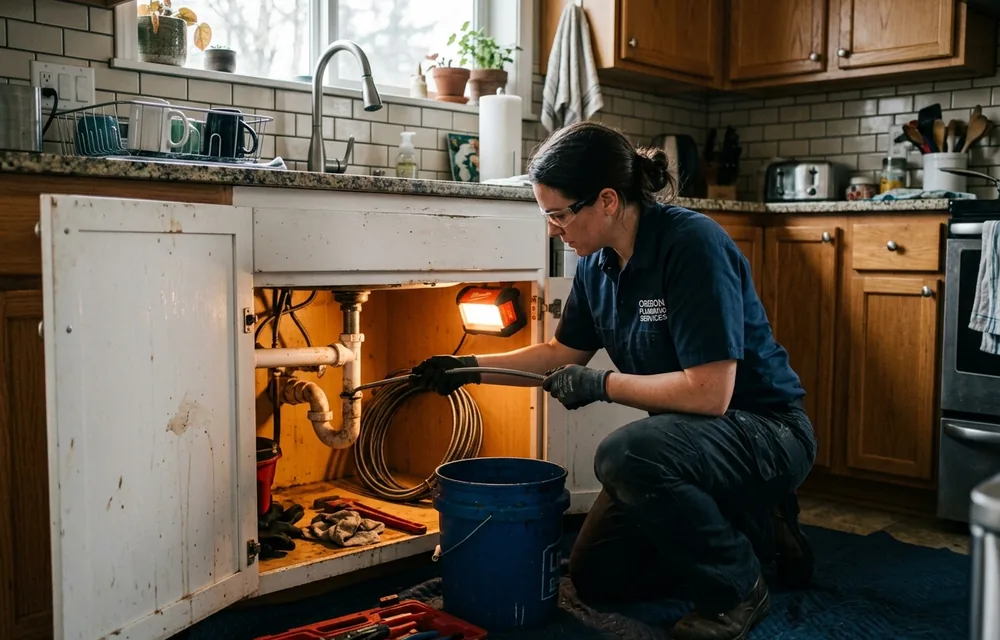
Drain Cleaning
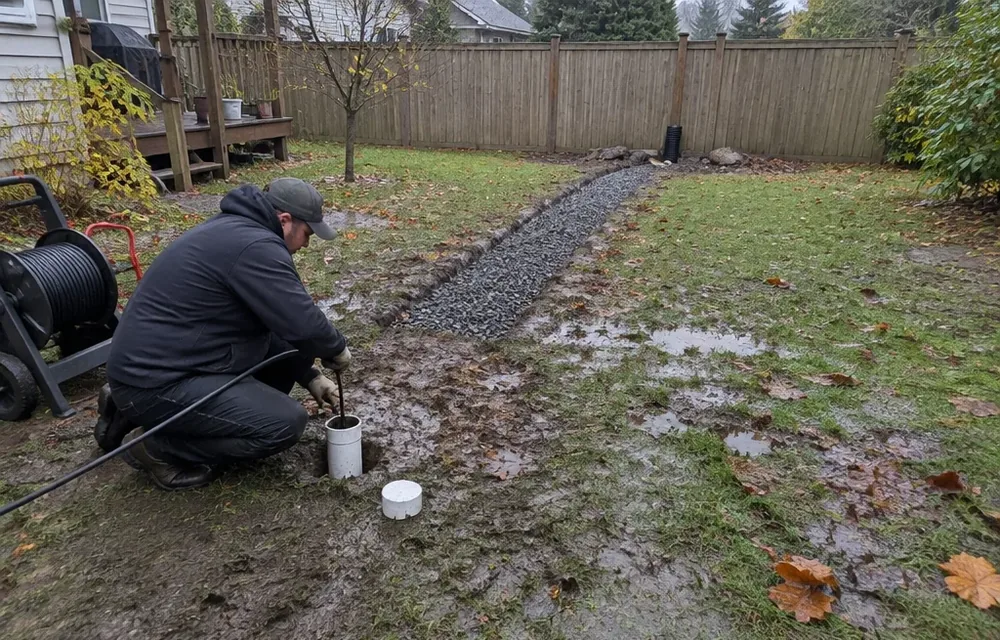
French Drain Cleaning & Repair
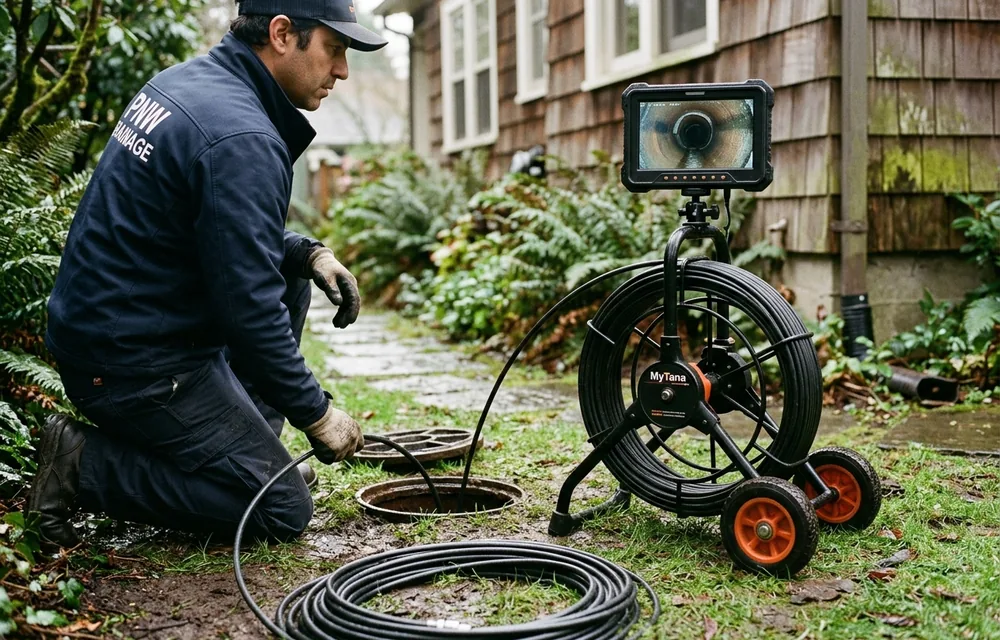
Sewer Scope & Camera Inspection
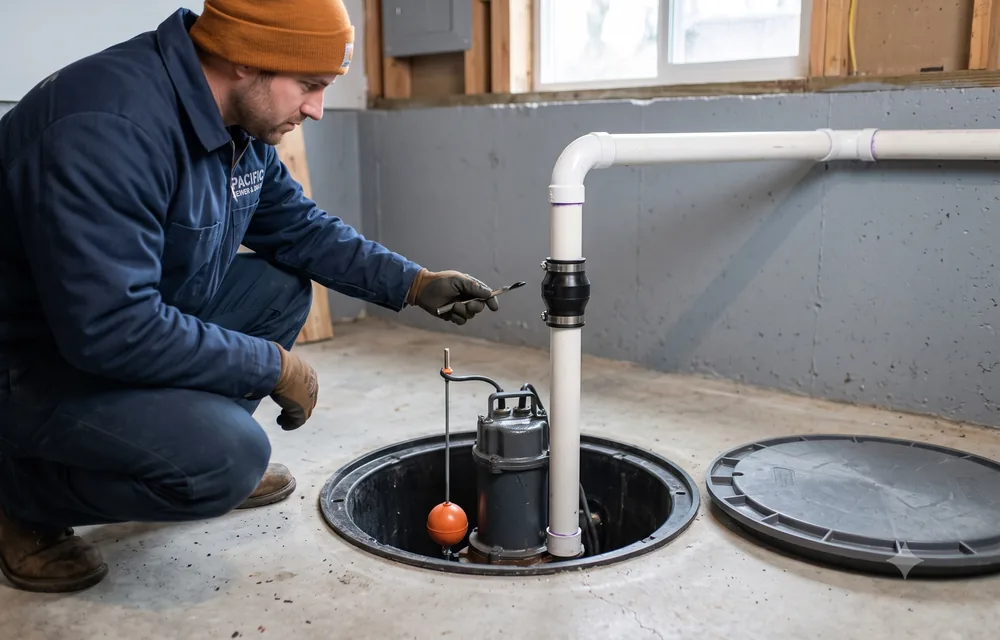
Sump Pump Installation & Repair
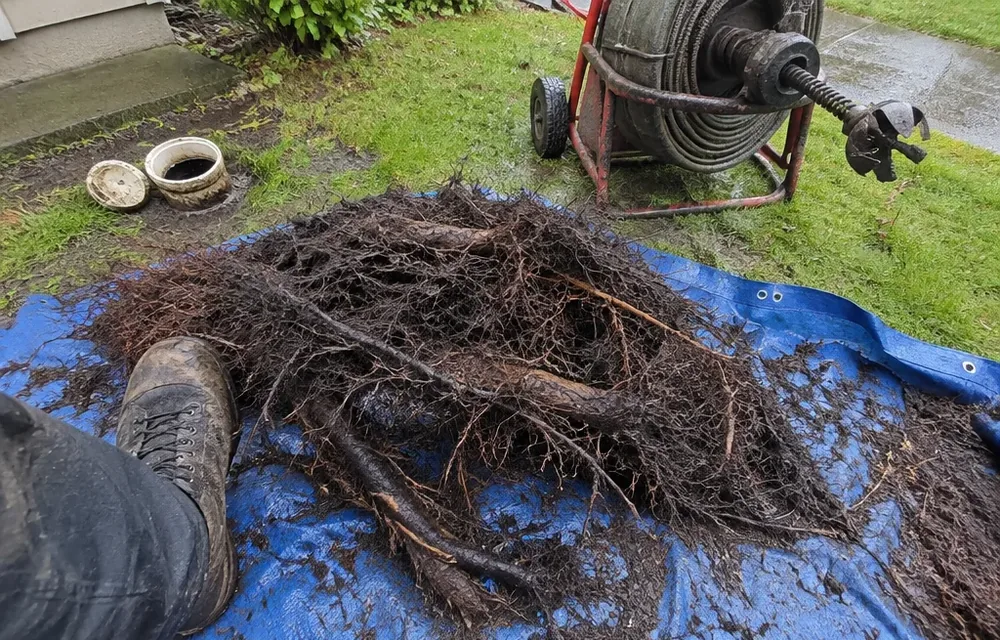
Rooter Service & Tree Root Removal
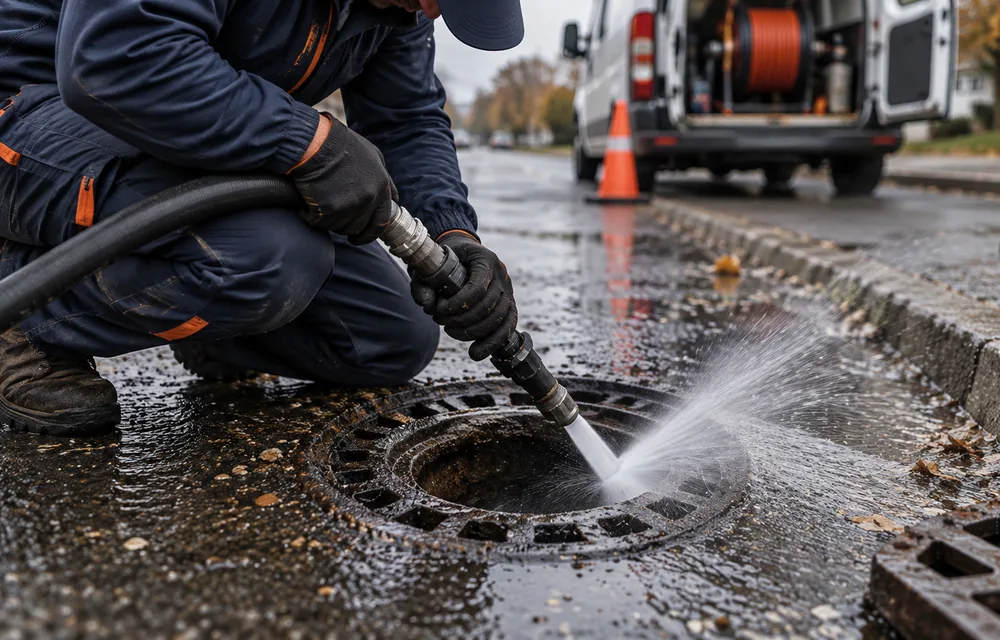
Hydro Jetting
Beaverton plumbing questions
Why does my Beaverton crawlspace stay wet all winter?
Washington County's heavy clay soil is the usual answer. Clay sheds water poorly, so rain that would drain away in sandier ground instead arrives at your foundation and stays. Before adding a sump pump, check that gutters and downspouts discharge well away from the house and that grading slopes away from it — a large share of Beaverton crawlspace water is delivered by the roof, not the water table.
My 1970s Beaverton home has slow drains everywhere. Why?
Homes from that era typically have cast iron drain lines that are now 50-plus years old. Cast iron corrodes from the invert outward, leaving a rough scaled interior that catches everything passing through it. Cabling gives shorter and shorter relief as this progresses. A camera pass will show whether you are looking at cleaning, lining, or replacement.
Do I need a sump pump in Beaverton?
If you have finished below-grade space or persistent crawlspace moisture, probably yes — and it should be a cast-iron pump with battery backup. Beaverton's clay soils keep pumps cycling continuously from November through March, which is far harder duty than a plastic pump handles for long.
Why do so many Beaverton homes have the same problem in the same year?
Because they were built in the same year. Beaverton's growth came in concentrated waves, with large tracts in the 1960s, 1970s and 1980s, so the cast iron drain lines in a given subdivision reach end of life together rather than one house at a time. Neighbours comparing notes about slow drains in the same season is a structural pattern here, not a coincidence.
My Beaverton downspouts drain right next to the house. Does that matter?
Considerably, and it is the cheapest thing on this list to fix. A roof sheds a large volume of water, and on Washington County clay that water does not percolate away, it sits against the foundation. Extending downspouts well clear of the wall and correcting grading so it slopes away resolves a meaningful share of Beaverton crawlspace moisture without any plumbing work at all.